
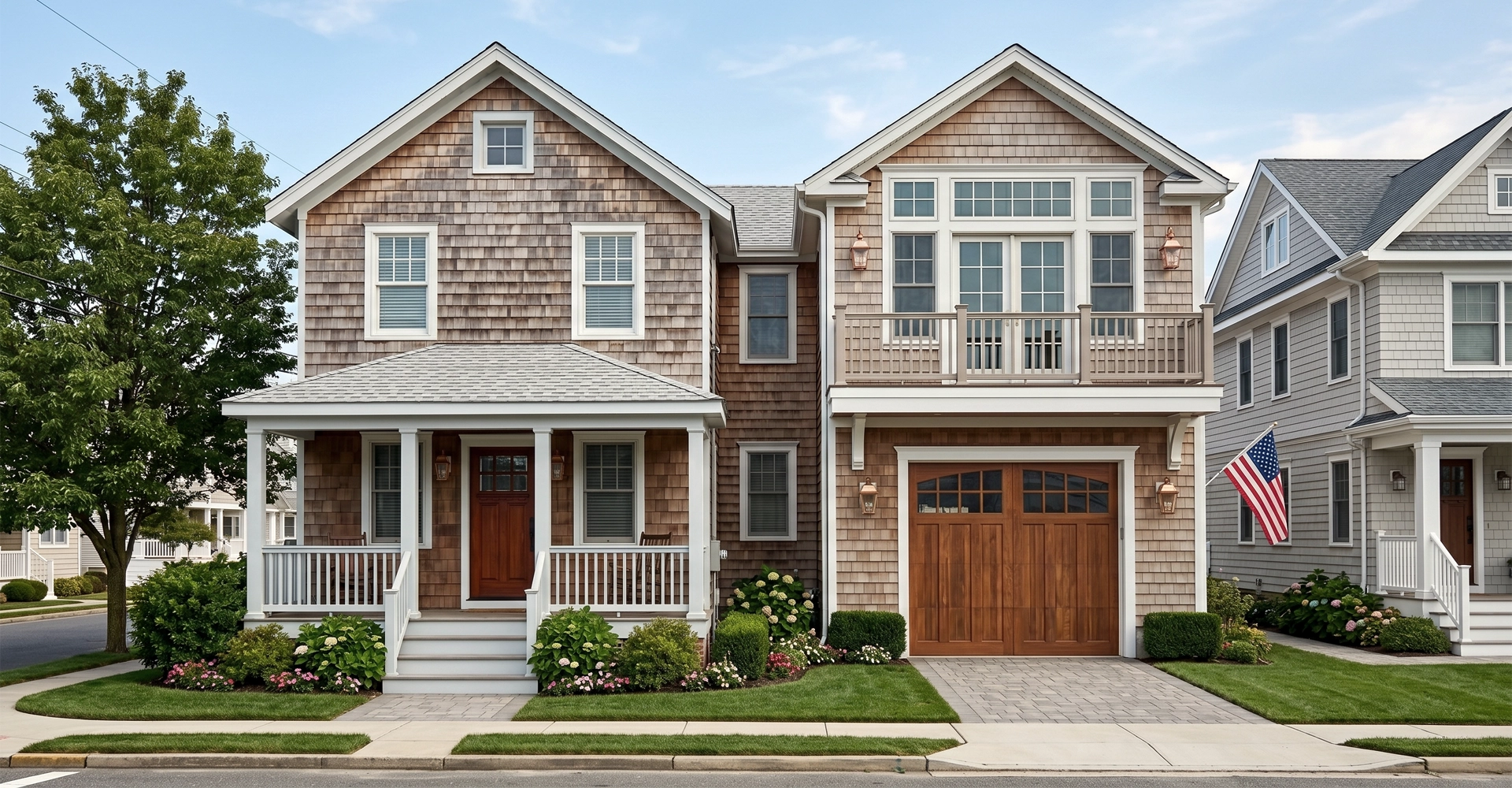
Home Additions in Point Pleasant Beach, NJ
Building an addition in Point Pleasant Beach is rarely a simple bump-out. Between tight lots, CAFRA regulations, FEMA flood maps, and the Borough’s strict zoning laws, expanding your home is a major structural project. Throw in the undersized foundations of the town’s classic 1920s bungalows, and most inland contractors get stuck, but we don’t.
Gambrick Construction has built at the Jersey Shore for over 40 years. Based right here in Point Pleasant, we design and build structural additions engineered for this exact marine environment. Whether you need a second story on a Lake of the Lilies bungalow, a rear expansion near the inlet, or a combined lift-and-add in a flood zone, we handle it all:
- Structural Engineering: We reinforce 1920s foundations to safely carry new second stories, using steel beams, sistered joists, and engineered LVL framing where the original lumber falls short.
- Coastal Foundations: We engineer concrete spread footings or drive deep helical and timber pilings for strict FEMA A-Zone and V-Zone compliance. Our freeboard strategies and flood vents actively help lower your flood insurance premiums.
- CAFRA & Borough Permits: We manage the tricky impervious lot coverage math, setbacks, NJDEP coastal filings, and Planning Board approvals in-house.
- Hurricane-Resistant Building: We engineer for Exposure D wind loads (NJ’s most severe category) using Type 316 stainless steel fasteners, Simpson Strong-Tie hardware, and premium weather barriers to protect against driving rain and salt spray.
Why Adding On in Point Pleasant Beach Is Different
Inland contractors are used to big yards and dry basements but Point Pleasant Beach is completely different, with strict building rules and tough coastal engineering challenges.
- Tight Lot Coverage (40’×100′ Standard): Most lots in PPB are 40’×100′ or 50’×100′. Strict town limits on lot coverage usually mean you cannot build outward. That makes second-story add-a-levels the smartest way to get more space. We specialize in building up, which includes reinforcing your existing foundation to hold the new weight.
- CAFRA & NJDEP Approvals: The whole Borough falls under the Coastal Area Facility Review Act. Whether your addition needs a Permit-by-Rule or a General Permit, one simple paperwork mistake can delay your project for months. We handle all CAFRA filings and NJDEP paperwork in-house so things keep moving.
- FEMA 50% Rule & BFE: Much of the town is located in A-Zones and V-Zones. If you build a large addition, you might trigger the “substantial improvement” rule. This rule forces you to raise your entire home up to the current Base Flood Elevation (BFE). We design your project to stay under this limit when possible, or we handle the whole job at once with a combined lift-and-add permit.
- Marine-Grade Materials (Type 316, Exposure D): Salt air destroys standard building materials fast. The Jersey Shore is also rated Exposure D, which is the NJ building code’s most severe wind category. To fight this, we use Type 316 stainless steel fasteners, closed-cell spray foam, and wind-rated exteriors like James Hardie, AZEK, or real cedar shake on every coastal addition.
- Summer Construction Logistics: Narrow streets and strict summer rules limit when heavy equipment and deliveries can come near the boardwalk. Our project managers schedule material drops and dumpster swap-outs around these peak-season rules so your build does not stall.
Point Pleasant Beach Home Additions: Neighborhoods and Their Construction Realities
Point Pleasant Beach is small, about 1.7 square miles total, and only 1.4 of that is actually land, but the construction realities change dramatically block by block. A rear addition on the oceanfront is a completely different engineering project than the same addition three blocks inland near Arnold Avenue.
Here’s how we evaluate your specific lot.
Oceanfront and Boardwalk Blocks
Homes on the blocks nearest the Atlantic sit in V-Zones or coastal A-Zones with high Base Flood Elevation (BFE) requirements. Wind exposure is rated Exposure D, the most severe category in the NJ building code. Additions on these lots almost always require deep-driven timber or helical piles, engineered wind-resistant framing, and impact-rated glazing. Lot coverage is famously strict, making vertical additions the primary path forward.
- The Reality: Expect a full structural engineering review, helical pile foundations, and, if built correctly, a meaningful drop in your flood insurance premiums.
The North End at the Manasquan Inlet
The northernmost blocks running up to the Manasquan Inlet mix older waterfront homes with newer post-Sandy rebuilds. Flood zone designations vary block by block, some lots are V-Zone right up to the bulkhead, while others are A-Zone just one block inland. Bulkhead condition is often a gating issue for any rear expansion here.
- The Reality: Waterfront setbacks and riparian rights dictate your footprint. An aging timber or steel bulkhead may need reinforcement or replacement before we can stage a foundation upgrade for a rear addition.
Lake of the Lilies and Little Silver Lake
The blocks surrounding PPB’s two freshwater lakes are some of the trickiest in town to build on. Lake of the Lilies sits at the southern end of the Borough near the Bay Head line; Little Silver Lake runs through the central blocks between Arnold and Trenton Avenues, just inland of the boardwalk. The water table in both areas is typically 3 to 5 feet below grade, which complicates even basic slab foundations. NJDEP freshwater wetland transition buffers apply to many of these lots, often invisibly to the homeowner until the permit is pulled. These neighborhoods also hold much of the Borough’s 1920s and 1930s bungalow stock, usually sitting on undersized original footings.
- The Reality: Expect geotechnical soil review, mandatory foundation reinforcement before framing an add-a-level, and potential NJDEP wetland transition area compliance.
Arnold Avenue and the Railroad Corridor
Arnold Avenue is the commercial spine of Point Pleasant Beach and the location of the NJ Transit North Jersey Coast Line station. Residential blocks running parallel to the rail line feature early-1900s homes on tight lots with shallow side-yard setbacks. However, much of this corridor sits in an X-Zone, outside the FEMA Special Flood Hazard Area.
- The Reality: Faster, cleaner permitting paths and less FEMA elevation requirements mean more of your budget goes into the build itself. The main hurdles here are reinforcing century-old foundations and upgrading undersized electrical services to carry the load of a new second story.
West of Route 35 (The Point Pleasant Borough Line)
The western half of PPB, running up to the border with Point Pleasant Borough, offers a mix of mid-century ranches and newer infill homes on slightly larger lots. It’s a more forgiving construction environment than the oceanfront side, though lots backing up to the Manasquan River or adjacent marshland still trigger A-Zone and CAFRA jurisdictional reviews.
- The Reality: A strong area for executing horizontal rear additions and expansive outdoor living spaces and ADUs, provided the impervious lot coverage math clears the zoning office.
Manasquan Riverfront (Channel Drive to the Route 35 Bridge)
This stretch features some of the highest-value, most complex real estate in the Borough. While it’s protected from direct ocean wave action, the river acts as a wind tunnel, and properties here face strong tidal currents, severe wind shear, and strict NJDEP oversight. Before expanding a footprint toward the water, we often have to verify historical Riparian Grants and exact waterfront property lines.
- The Reality: Waterfront additions here demand heavy coastal engineering. You’re typically dealing with Coastal A-Zone or V-Zone regulations, meaning deep-driven timber or helical pilings. If you’re adding a heavy rear expansion or multi-level deck, the structural integrity of your existing bulkhead and its tie-back system will dictate exactly how close to the water we can build.
Types of Additions We Build in Point Pleasant Beach
Every lot in Point Pleasant Beach has its own limits on what the Borough and the DEP will actually let you build. We design and build a few specific types of additions to help you get the most space possible without breaking those local rules.
Second-Story Add-a-Levels
This is the most popular addition in Point Pleasant Beach. Since you usually can’t build outward on small shore lots, we go up. This is major structural work: we check if your current foundation can handle the extra weight, add steel or engineered lumber if it needs more support, and safely tie the new floor into your existing house.
We handle everything, including zoning your HVAC, rerouting plumbing, adding a new staircase, and upgrading older 100-amp electrical panels. Most second-story projects add 800 to 1,400 square feet and take about 6 to 8 months.
Rear Additions & Bump-Outs
If your lot is big enough to pass the Borough’s lot coverage rules, a rear addition is a great choice. You get to keep your main house mostly as-is while adding a family room, a bigger kitchen, or a master suite off the back. Micro bump-outs (just 2 to 6 feet) can also give you a bigger kitchen or bathroom without needing major foundation work.
Because these smaller extensions don’t require tearing into your home’s main structure, they get approved and built much faster than a full second story.
In-Law Suites & Multi-Generational Additions
We build attached in-law suites, usually side or rear additions with their own private entrance, bedroom, bathroom, and small kitchen. Point Pleasant Beach has strict zoning laws against building separate, detached guest houses (ADUs). Because of this, an attached, fully integrated suite is the smartest and fastest way to get your project approved by the town.
Primary Suite Additions
Adding or expanding a master bedroom suite is one of the best ways to increase your home’s value. This usually combines a rear or second-story addition with a luxury bathroom and a walk-in closet. For coastal bathrooms, we use tile-over-Schluter®-KERDI waterproofing, Rockwool insulation, and marine-grade hardware so it lasts in the damp salt air.
Raise-and-Add Projects
If your home sits below the Base Flood Elevation (BFE) and you want more space, the smartest move is a combined lift-and-add. We raise your house onto a new, code-compliant foundation (like helical piles in V-Zones), build your new addition, and put it all back together as one seamless project. Doing it this way avoids triggering the FEMA 50% rule twice, helps you use ICC (Increased Cost of Compliance) funds, and drops your long-term flood insurance premiums.
Sunrooms & Four-Season Additions
We only build real, stick-built four-season sunroom additions, no cheap prefab kits. We build these on insulated concrete or pile foundations, tie them directly into your home’s central heating and cooling system, and install strong impact windows. This ensures your new sunroom meets the strict NJ Energy Code and stays comfortable all year round.
The Point Pleasant Beach Permit Process
Every addition in Point Pleasant Beach goes through the Construction Department at Borough Hall on Arnold Avenue. Depending on the size of your project, the Planning or Zoning Board may also need to sign off.
Here is how the process works for a typical addition:
- Engineering & Surveys: You usually need a fresh property survey, plot plan, topo, and drainage plan. We coordinate all of this with trusted local engineers.
- Architectural Plans: Gambrick is a builder, not an architectural firm, but we manage the entire design phase. We partner with a licensed local architect to draw blueprints designed to fit your real-world budget.
- Zoning Review: The town checks your lot coverage, setbacks, and building height. Breaking zoning rules requires a Zoning Board of Adjustment variance, which typically adds 3 to 6 months to your timeline.
- CAFRA Filing: We file your required NJDEP coastal permits (usually a Permit-by-Rule or General Permit) at the same time we submit your local permits.
- Flood Zone Review: For homes in a FEMA flood zone, we prepare your Elevation Certificate and work directly with the Borough’s Floodplain Administrator.
- Permits & Inspections: Once approved, Borough Hall issues the construction permits. During the build, we schedule and manage every town inspection (foundation, framing, rough mechanicals, and final).
The Realistic Timeline: A straightforward addition with no zoning variance takes 8 to 14 weeks from submitted plans to approved permits. If your project requires a variance, expect 5 to 8 months before we break ground.
Point Pleasant Beach Home Additions FAQ
Building at the Shore comes with a lot of red tape and unique coastal challenges. Here are straight answers to the most common questions we hear from Point Pleasant Beach homeowners about permits, timelines, and budgets.
Do I need a CAFRA permit for a home addition in Point Pleasant Beach?
In almost all cases, yes. Effectively the entire Borough falls under CAFRA jurisdiction. However, for most residential additions, you will only need to file a Permit-by-Rule or General Permit rather than a full, complex individual CAFRA permit. We prepare and file all of this paperwork for you as part of the project.
Will adding on to my home trigger the “50% rule”?
It depends on the size of the project and the current market value of your actual house (not the land). FEMA’s 50% rule kicks in when the cost of your addition equals or exceeds 50% of the structure’s market value. Large additions, especially second stories on older bungalows, can easily trigger this. We run the math with you before the design phase to decide if we should scale the addition back to stay under the limit, or go ahead with a combined raise-and-add.
Can I build a second-story addition on a home in a V-Zone?
Yes, but it requires serious engineering. V-Zone additions require highly engineered foundations (like helical piles), wind-resistant framing, and breakaway wall construction below the Base Flood Elevation (BFE) if we are keeping the existing foundation. We have successfully completed several of these; they are complex but entirely doable.
How long does a home addition take in Point Pleasant Beach?
Most additions take 4 to 8 months of active construction, preceded by 2 to 4 months of design and permitting. Larger raise-and-add projects usually run 8 to 12 months from start to finish. If your project needs a zoning variance, add another 2 to 5 months to the permit phase.
Can I build an addition during the summer season?
Yes, but with some rules. The Borough restricts certain construction activities, like heavy equipment, noisy work, and large deliveries, on the oceanfront and boardwalk blocks during the peak tourist season. We schedule your site work around these rules so the project keeps moving. If you live west of the boardwalk corridor, summer construction is generally unrestricted.
How much does a home addition cost in Point Pleasant Beach?
Costs vary widely based on the size, foundation needs, and finishes. As a rough guide for our market:
- A straightforward rear addition or bump-out typically runs $250–$400 per square foot.
- A second-story add-a-level runs $300–$500 per square foot.
- A full raise-and-add project with high-end finishes can run $450–$700+ per square foot. We provide exact, line-item pricing after the blueprints are finished so there are no surprises.
Do you handle the architectural design too?
We manage the entire design process for you. While Gambrick is a custom builder and not an architectural firm, we partner closely with a licensed local architect. This means you still get a seamless experience, from the first sketch and structural engineering to CAFRA filing and final construction. You have one point of contact managing the whole team to make sure the design actually fits your real-world budget.
Ready to Talk About Your Addition?
If you are considering a home addition in Point Pleasant Beach, the smartest first step is a site walk-through. We will look at your existing foundation, review your lot coverage, check your flood zone designation, and tell you honestly what is realistic within your budget.
Call us at (732) 892-1386 to speak with us directly or Contact us online to schedule your free, on-site consultation.