
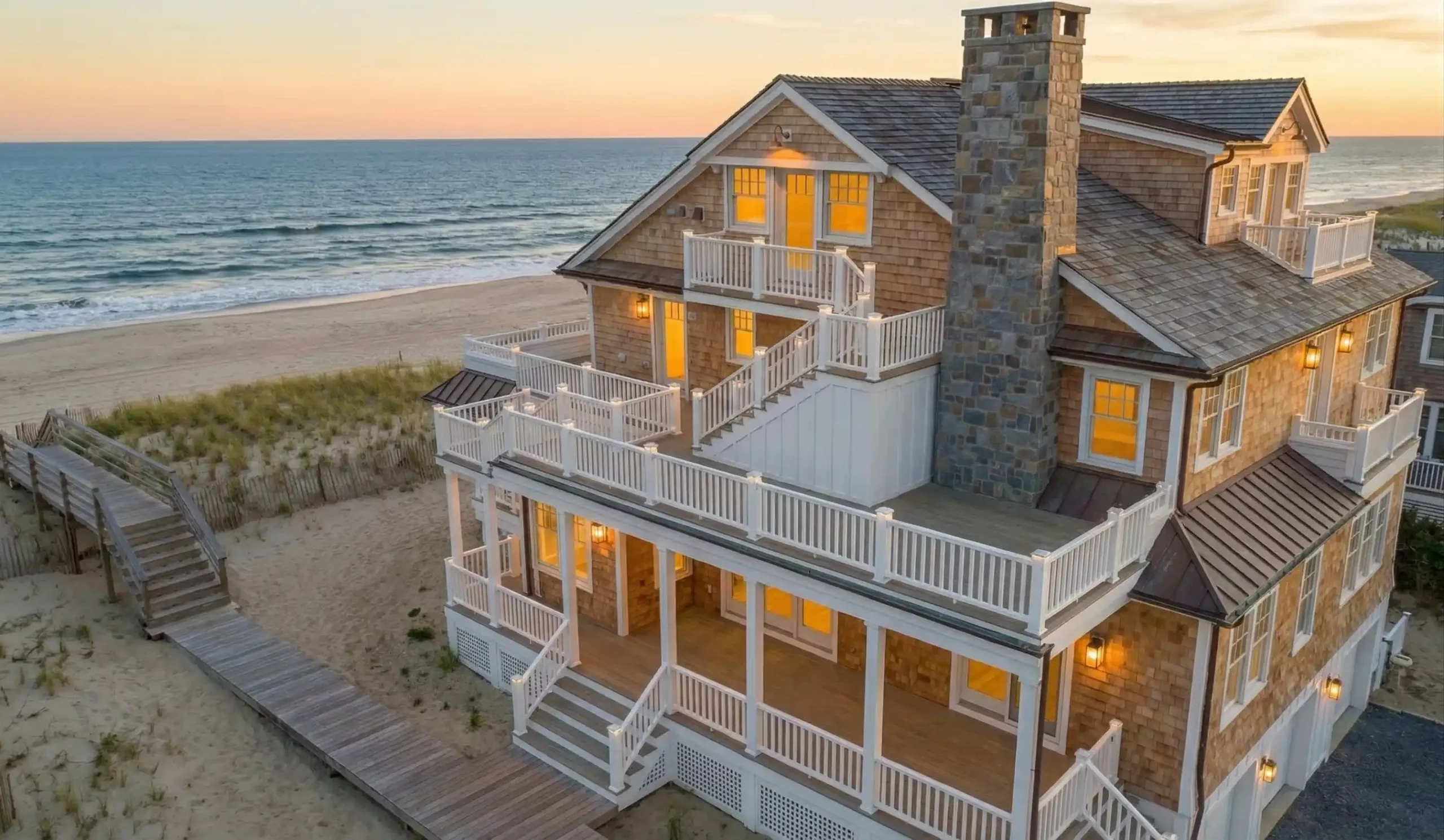
Waterfront Home Builder in Point Pleasant, NJ
As a specialized Waterfront Home Builder based in Point Pleasant, we’ve spent over 3 decades building homes to survive the Jersey Shore environment. Standard construction doesn’t last here. We exclusively utilize marine-grade stainless steel, helical & wood piles, impact-rated windows, fiber cement James Hardie siding, and architectural roof shingles engineered to withstand 130 mph hurricane-force winds.
Building on the water requires a fundamentally different approach than inland construction. At the Jersey Shore, homes face constant exposure to salt spray and nor’easters, requiring designs that balance structural resilience with iconic coastal style. We specialize in elevated floor plans to maximize views and classic aesthetics—featuring real wood cedar shakes, light colors, weathered wood, and open layouts that offer seamless transitions to outdoor spaces like decks, docks, and patios.
Whether the property is located on the oceanfront, bay, river, lagoon, or one of the many lakes here in Pt. Pleasant Beach, we engineer our homes to resist corrosion and storm damage without sacrificing the beauty of the waterfront lifestyle.
Engineered for Durability: Materials & Methods
Standard residential materials cannot withstand the salt, wind, and humidity of the Jersey Shore. We strictly utilize salt-resistant and moisture-proof building products designed to extend the lifespan of your waterfront investment.
Siding & Exterior Defense
The exterior shell acts as the first line of defense against coastal elements. We recommend materials that resist rot, insects, and the constant abrasion of salt spray.
- Fiber Cement (James Hardie): Our top recommendation for its superior resistance to moisture, salt, high winds, impacts, and fire.
- High-End Vinyl (Cedar Impressions): We install premium vinyl options like CertainTeed Cedar Impressions that mimic the look of real wood shake without the maintenance, offering superior durability against salt and wind.
- Brick & Stone: Naturally resistant to saltwater corrosion and requiring minimal long-term maintenance.
- PVC & Fiberglass: Modern synthetic options like Azek offer protection against rot and insects.
- Cedar Shake Siding: The quintessential choice for a traditional Jersey Shore aesthetic. We install high-grade cedar for its natural resistance to decay and timeless coastal appeal.
Roofing Systems
To handle coastal storms, your roof must be rated for high-velocity winds and salt exposure. We install systems specifically engineered to prevent uplift and corrosion.
- Metal Roofing: Options like galvanized steel, aluminum, and copper offer the highest level of corrosion resistance, superior wind uplift resistance (especially standing seam), and energy efficiency.
- Slate & Clay: Heavy, durable materials that easily withstand harsh weather and high winds.
- Architectural Asphalt Shingles: High-grade lines from manufacturers like CertainTeed that are rated for 130 mph hurricane-force winds and feature algae-resistant granules to combat humidity-driven mold growth.
Decks & Marine Hardware
Outdoor living spaces on NJ Waterfronts are subjected to the harshest UV and salt exposure. We prioritize corrosion resistance and structural integrity, offering a range of materials from low-maintenance synthetics to traditional wood.
- Composites & PVC (Trex, TimberTech, Fiberon): Excellent durability for decks, bulkheads, and docks. These materials resist fading, mold, and warping, eliminating the need for annual staining.
- Polypropylene & Aluminum: For extreme durability, we install Titan Deck polypropylene or powder-coated aluminum, which remain cool to the touch and offer superior impact resistance.
- Natural Wood Options: We install Cedar, Redwood, and MCA Pressure-Treated Lumber. While budget-friendly and beautiful, we ensure clients understand these require regular maintenance to resist the coastal elements.
- Marine-Grade 316 Stainless Steel: This is the “gold standard” for coastal areas. We strictly use 316 stainless steel for all hidden fasteners and structural connections to prevent the rust streaks and failure common with standard galvanized hardware.
- Structural Support: We design foundations specifically to handle soil erosion, high winds, and flood risks, ensuring your deck remains stable even in severe weather.
Windows, Doors & Insulation
Protecting the building envelope is critical for energy efficiency and storm safety. On the Jersey Shore, windows and doors face constant threats from salt air corrosion, high humidity, and hurricane-force winds. We prioritize moisture control and structural integrity, checking local codes to ensure every unit meets strict Performance Grade (PG) requirements—often exceeding them with PG50+ rated systems to withstand heavy driving rain.
- Impact-Rated Windows (Andersen & Marvin): We install premium lines like Andersen A-Series with Stormwatch or Marvin Coastline. These feature non-corrosive cladding, stainless steel hardware, and laminated impact-glass capable of withstanding projectile debris during severe weather.
- Closed-Cell Spray Foam: This is our standard for waterfront insulation. It acts as a powerful vapor barrier to control humidity, add structural rigidity, and prevent mold growth in floors, walls, and attics.
Marine Structures
For properties right on the water’s edge, we integrate marine construction directly into the build. For most NJ waterfront projects, we design systems that balance longevity, function, and regulatory compliance.
- Bulkhead Systems: We install vinyl or composite bulkheads as the durable, low-maintenance standard for seawall stabilization. For budget-conscious projects, properly treated wood remains a viable option.
- Custom Docks: We construct fixed and floating docks using timber, composite, or aluminum framing, tailored to your specific recreational needs.
- Structural Pilings: To support these structures, we select the appropriate foundation for your soil conditions. We utilize steel or concrete pilings—alongside traditional treated wood—to provide superior resistance to marine borers and ensure long-term stability.
Designing for a NJ Waterfront Lifestyle
Structural integrity is our baseline, but livability is the goal. We design custom waterfront homes that capture the beauty of the Jersey Shore while adapting to modern family needs.
- Inverted & Vertical Layouts: Waterfront lots are often narrow, requiring smart vertical planning. We maximize square footage with steep rooflines and multiple stories, frequently utilizing “reverse living” layouts that place the kitchen and great room on the top floor to capture the best ocean or bay views.
- Indoor-Outdoor Flow: We create seamless transitions to the water using large, impact-rated glass doors and multi-level decks. These spaces are designed to extend your living area outdoors, maximizing natural light and sightlines.
- Coastal Aesthetics: We balance durability with style, incorporating timeless elements like shiplap, natural stone, and soft coastal color palettes. Large windows are strategically positioned to “bring the outside in” without compromising storm safety.
- Future-Proofing & Multi-Gen Living: A custom home should last generations. We design with aging-in-place in mind, integrating residential elevators, wider doorways, and private suites to accommodate multi-generational families comfortably.
Navigating FEMA and CAFRA Regulations
Building on the New Jersey waterfront requires navigating a complex web of regulations. Since Hurricane Sandy, elevation and strict compliance are critical. A single misstep with the NJDEP or FEMA can delay a project for months. We manage this entire process for you, securing all necessary approvals to ensure your home is compliant, safe, and insurable.
- Flood Zone Engineering: We design to strict FEMA V-Zone standards, ensuring your foundation and elevation meet all requirements for Coastal A Zones. By correctly elevating the home and utilities above the 100-year floodplain, we can often save clients $2,000 to $5,000+ annually in flood insurance costs.
- Permit Management: We handle all filings for CAFRA, Waterfront Development, and Tidelands licenses, working directly with the Division of Land Resource Protection (DLRP) to navigate the bureaucracy.
- Public Access & Zoning: Owners on tidal waterways often face complex public access rules. We navigate these local zoning requirements early to ensure your property rights are protected while meeting municipal obligations.
- Exemptions & Speed: For renovation projects, we identify opportunities for expedited approvals, such as Zane Letters or Permits-by-Rule, to get your project started faster.
Frequently Asked Questions About Waterfront Construction
Do I need a CAFRA permit to build in towns like Mantoloking or Point Pleasant Beach?
If you’re building or renovating within the CAFRA zone (which spans from Cheesequake Creek to Cape May, covering most of Ocean and Monmouth Counties), you generally need a permit. However, simple repairs or reconstruction within the exact same footprint may be exempt. We use tools like NJ-GeoWeb to determine if your specific lot requires a full CAFRA Individual Permit or qualifies for a simpler Permit-by-Rule.
What permits do I need for a dock, boat lift, or bulkhead in Ocean County?
Most marine structures in tidal waters require a Waterfront Development Permit from the NJDEP. Additionally, if your dock extends over state-owned land (which includes most flowed tidelands), you’ll need a Tidelands License (for temporary use) or a Tidelands Grant (if purchasing the filled land). We handle these filings to ensure your dock or boat lift is legal and documented.
Do you handle the dock and bulkhead permitting for my new home build?
Yes. We view the entire waterfront property as a single system. We coordinate the required Waterfront Development Permits and Tidelands Licenses for your dock, boat lift, or bulkhead alongside the home building permits. This ensures your marine structures are legal, documented, and ready for use exactly when your new home is completed.
Can we fast-track the bulkhead replacement before building the new house?
Often, yes. If we are replacing an existing bulkhead in the same footprint before starting the home foundation, we can often secure a Zane Letter from the NJDEP. This confirms the work is exempt from a full Waterfront Development Permit, allowing us to stabilize your lot and start construction on the home much faster than waiting for standard marine approvals.
How does V-Zone vs. Coastal A-Zone construction affect my flood insurance?
V-Zones (Velocity Zones) face high-velocity waves and require pile foundations with breakaway walls. Coastal A-Zones are lower risk but still prone to flooding. We often build homes in A-Zones (like in Ortley Beach or Lavallette) to stricter V-Zone standards. This “over-engineering” increases durability and can significantly lower your flood insurance premiums.
What is a “No-Rise” Certification and when do I need one?
If your property is located in a designated FEMA Floodway, you cannot build anything that raises flood levels. A “No-Rise” Certification is an engineering document proving your new home won’t impact water flow. We coordinate with municipal engineers to secure this difficult approval, which is often required for riverfront properties.
What are the rules for building near wetlands in Brick Township?
Many waterfront properties in Brick Township—especially near the Metedeconk River or Reedy Creek—contain regulated freshwater wetlands or transition areas (buffers). Building a new home in these zones requires a Freshwater Wetlands Permit or a Transition Area Waiver from the NJDEP. We assess these environmental constraints early to determine exactly where you can build, ensuring you don’t violate state protection acts while maximizing your buildable lot area.
What are the specific restrictions for building waterfront “East of Ocean Ave” or near the Boardwalk?
Point Pleasant Beach enforces summer construction bans for properties east of Ocean Avenue. Typically, all commercial construction must cease from the Saturday before Memorial Day through Labor Day to minimize noise for tourists and residents. Additionally, the new “Half-Story” ordinance limits third-floor attic spaces to 33% of the floor area below (or 500 sq. ft., whichever is less) and prohibits cooking facilities, effectively preventing full third-story rental suites.
Are there special building rules for Lake of the Lillies or Twilight Lake?
Yes. Many lakefront lots in Point Pleasant Beach have property lines that extend into the water. However, the Borough’s zoning code typically deducts any land below the mean high water line from your total “buildable lot area.” This can significantly reduce the size of the home you are allowed to build. We often use permeable pavers for patios in these zones because they may count as only 50% impervious coverage, allowing you to maximize your outdoor living space without violating lot coverage limits.
Can I build a deck on the dunes if I own an oceanfront lot?
Yes, but it is highly regulated. Point Pleasant Beach Ordinance allows for one dune platform per oceanfront lot, which generally cannot exceed **200 square feet**. You’re also limited to a single 4-foot wide dune walkover to access the beach, which must be fenced with split rail or sand fencing to protect the dune vegetation. This same general regulation is true in almost all towns along the Jersey Shore.
Service Areas
Gambrick Construction is proudly based in Point Pleasant, NJ. Our core service area focuses on the coastal communities of Monmouth and Ocean County.
- Point Pleasant Beach & Borough
- Bay Head & Mantoloking
- Manasquan & Brielle
- Spring Lake & Sea Girt
- Brick Township & Toms River
- Wall Township & Howell
- Lavallette & Ortley Beach
- Rumson & Colts Neck
- Princeton (Select Projects)
Statewide Projects: While our daily operations are concentrated along the Jersey Shore, we accept select large-scale projects throughout New Jersey, including Bergen, Essex, and Mercer Counties.
Ready to Get Started? Let’s talk about how we can help.
Call 732-892-1386 or contact us online today.